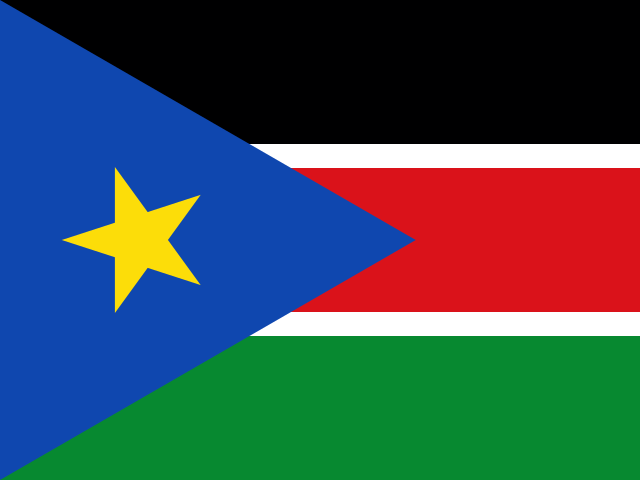
 South Sudan

South Sudan: The Broken Dream of the World's Youngest Nation
On 9 July 2011, South Sudan became Africa's 54th country and the youngest state in the world, amid the euphoria of a referendum in which 98.83% of South Sudanese voted for independence. Two years later, in December 2013, the dream collapsed: President Salva Kiir and Vice President Riek Machar plunged the country into an ethnic civil war. With an IJVA score of 22/100, South Sudan ranks last — a state that never truly managed to be born.
The Phantom State
South Sudan is a country without roads. Literally. With an area comparable to France, the country has only a few hundred kilometres of paved roads. The oil paradox is cruel: South Sudan holds sub-Saharan Africa's third-largest oil reserves, but its citizens are among the poorest in the world. Corruption is systemic: billions of dollars in oil revenues have vanished into offshore accounts.
The Ubuntu Strength: Cattle, Songs and Survival
Behind the state catastrophe, South Sudanese societies carry cultures of astonishing richness. The Dinka, the Nuer, the Shilluk — over 60 ethnic groups — have developed remarkable social systems. Cattle is not merely economic wealth: it is a language, a social currency, a kinship system. Among the Dinka and the Nuer, a man knows each of his cows by name and composes songs in their honour.
« Nhialic ee kɔc kuen ke raan »
God created men to be together
— Proverb dinka
South Sudan teaches us that independence is not enough if it is not accompanied by justice. That a flag and an anthem do not make a nation — but that a people who sing for their cattle, who dance under the stars despite famine, carry within them something indestructible.