
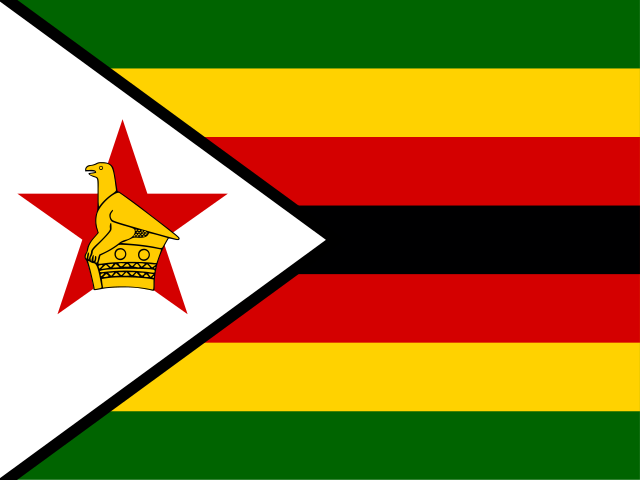
 Zimbabwe



Zimbabwe: Africa's Broken Breadbasket
Zimbabwe was once the breadbasket of Southern Africa — a country with fertile land, rich mines and exemplary education. The ruins of Great Zimbabwe bear witness to a civilisation that mastered architecture long before colonisation. Today, this country has become synonymous with hyperinflation, brain drain and authoritarianism. Robert Mugabe, liberation hero turned tyrant, left a toxic legacy that his successor Mnangagwa perpetuates.
The Survival Economy
To understand today's Zimbabwe, one must remember what it was. In the 1990s, the country exported tobacco, maize and flowers. Then came the land reform programme of 2000, hyperinflation that reached 231 million percent in 2008. Over 90% of the working population is in the informal economy. The diaspora — estimated at 3–4 million people — has become the country's primary source of funds.
The Ubuntu Strength: Mbira, Chimurenga and Shona Pride
Zimbabwe is the country that gave the world the very concept of Ubuntu. Hunhu (Ubuntu in Shona) structures social relations. Mbira music is the sonic soul of Zimbabwe. Thomas Mapfumo and his chimurenga music remain the voice of the national conscience. Zimbabwean literature — from Dambudzo Marechera to NoViolet Bulawayo to Tsitsi Dangarembga — is among the most brilliant on the continent.
« Chara chimwe hachitswanyi inda »
A single finger cannot crush a louse
— Proverb shona
Zimbabwe reminds us that a country can be both brilliant and broken — that education without freedom produces exiles rather than builders. But the ruins of Great Zimbabwe have stood for eight centuries, and stones do not lie.